

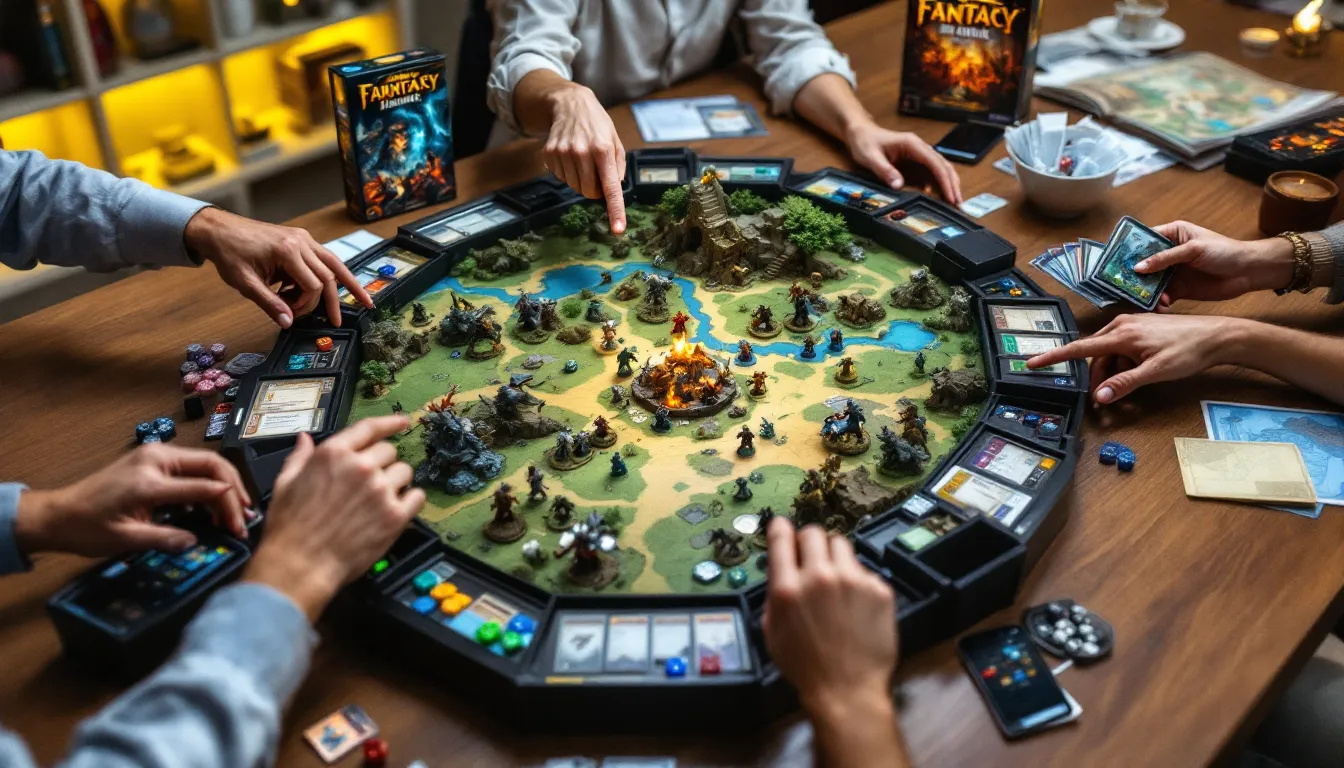
The tabletop gaming market has exploded over the past decade, and adventure board games sit at the heart of that renaissance. These aren’t your childhood roll-and-move games, they’re immersive, story-rich experiences that blend tactical combat, exploration, and character progression into sessions that can span hours or entire campaigns stretching across months.
Whether you’re a veteran dungeon master looking to expand your collection or a digital gamer curious about what cardboard and dice can offer, adventure board games deliver something unique: face-to-face tension, shared victories, and emergent stories that no algorithm can script. From solo dungeon crawls to sprawling cooperative epics, 2026 offers more variety and polish than ever before.
This guide breaks down everything you need to know, what defines the genre, which games deserve shelf space, and how to choose the right adventure for your table.
Key Takeaways
- Adventure board games deliver immersive, story-rich experiences that blend tactical combat, exploration, and character progression—creating emergent narratives shaped by player choices rather than predetermined outcomes.
- The genre spans multiple styles including dungeon crawlers, campaign-based narratives, cooperative quests, and legacy games, each offering distinct mechanics that cater to different group sizes, commitment levels, and experience thresholds.
- Character progression systems and discovery mechanics create engaging dopamine loops similar to RPGs, with customization options ranging from deckbuilding to skill trees that reward both tactical mastery and thorough exploration.
- Success in adventure board games depends on matching complexity to your group’s experience, considering player count sweet spots, accounting for actual play time being 2x the box estimate, and prioritizing theme alignment with your table’s preferences.
- Digital adaptations solve real logistical problems like setup time and rules enforcement, but the core appeal of adventure board games—tactile components, unfiltered social dynamics, and memorable face-to-face moments—remains irreplaceable.
What Are Adventure Board Games?
Defining the Adventure Genre
Adventure board games center on exploration, narrative progression, and player-driven choices that shape outcomes. Unlike abstract strategy games where theme is window dressing, adventure games make story and setting integral to mechanics. Players typically control characters who grow stronger, uncover secrets, and face escalating challenges over the course of a session or campaign.
The genre encompasses everything from tactical dungeon crawlers with miniatures and modular boards to narrative-heavy card games where choices branch the story. What unites them is the sense of going somewhere and doing something, completing quests, defeating bosses, discovering loot, and experiencing a narrative arc that provides closure or sets up the next chapter.
How Adventure Games Differ from Other Board Game Genres
Adventure games occupy a distinct space between pure strategy titles and role-playing games. Where euro-style games like Agricola or Brass: Birmingham focus on optimization and resource management with minimal randomness, adventure games embrace dice rolls, card draws, and narrative uncertainty. You might plan the perfect turn only to have RNG turn an encounter into a desperate scramble.
Compared to traditional RPGs like Dungeons & Dragons, adventure board games offer more structure. There’s no game master improvising responses, the rulebook and components handle that. This makes them more accessible for groups without a dedicated DM, though it sacrifices some freeform creativity. Campaign-based adventure games like Gloomhaven or legacy titles bridge the gap, offering persistent character growth and evolving storylines without requiring someone to prep sessions.
Key Elements That Make Adventure Board Games Engaging
Narrative-Driven Gameplay and Storytelling
The best adventure games don’t just have a story printed in the rulebook, they generate stories through play. Branching quest paths, choice-and-consequence systems, and scenario-specific events create moments you’ll recount long after the session ends. Games like The 7th Continent or Sleeping Gods use exploration decks where every card flip might reveal treasure, danger, or cryptic lore that pieces together a larger mystery.
Narrative weight comes from stakes that matter. Character death, failed objectives, or timed scenarios where you’re racing against a doom track, these mechanics transform abstract failure into something that feels personal. When your barbarian falls in the final room and the group has to decide whether to press on or retreat, that’s drama no cutscene can match.
Exploration and Discovery Mechanics
Exploration drives the core loop in most adventure games. Modular boards, tile-laying systems, and card-based reveals keep the map uncertain until you venture into it. Mansions of Madness generates layouts procedurally through its companion app, while Jaws of the Lion uses a static map book but introduces new rooms and objectives each scenario.
Discovery isn’t just spatial, it’s mechanical. New enemy types with unique AI patterns force you to adapt tactics. Hidden items, secret doors, and optional objectives reward thorough exploration without making them mandatory. The best games balance guiding players forward while rewarding those who poke into every corner.
Character Progression and Customization
Leveling up, unlocking new abilities, and finding better gear taps into the same dopamine loop that makes RPGs and looters addictive. Campaign-based games build this progression across sessions, your character in Gloomhaven: Jaws of the Lion might start with four basic cards but end with a customized hand tailored to your playstyle and party composition.
Customization varies by game. Some use deckbuilding where you acquire new cards over time, others feature perk systems or branching skill trees. Solo-focused titles like Mage Knight let you build intricate combos over a single long session, while lighter games keep progression simple so new players aren’t overwhelmed by decision paralysis.
Types of Adventure Board Games
Dungeon Crawlers and Tactical Combat Games
Dungeon crawlers are the genre’s beating heart, miniatures on gridded maps, room-by-room battles, and loot drops. Descent: Legends of the Dark and Sword & Sorcery exemplify this subgenre with detailed minis, scenario books, and turn-based tactical combat where positioning and ability timing decide fights.
These games lean heavily on combat encounters with varying enemy AI. Some use dice-based combat with modifiers: others employ card-driven systems to reduce RNG. The appeal is immediate and visual, watching your painted hero minis clash with monster hordes never gets old, and the tactical depth rewards system mastery.
Campaign-Based Narrative Adventures
Campaign games stretch a single story across 15-100 hours, with persistent characters, unlockable content, and story branches that remember your choices. Gloomhaven remains the gold standard here, a 95-scenario behemoth with a branching narrative, retirement mechanics, and a world that evolves based on player decisions.
Sleeping Gods and Tainted Grail take a more open-world approach, letting players explore at their own pace rather than following a linear scenario path. These games often feature detailed role-playing game mechanics that rival dedicated RPG systems. Expect serious table commitment, campaigns can take months to complete, with regular sessions needed to maintain momentum.
Cooperative Quest Games
Coop quest games put the entire table against the game system. There’s no betrayer, no competing for victory points, everyone wins together or watches the kingdom burn. Eldritch Horror, Arkham Horror: The Card Game, and Spirit Island (though more strategic than narrative) fall into this space.
The tension comes from managing shared resources, coordinating actions, and triaging crises. Maybe you can save the village or stop the ritual, but not both. These games often include difficulty scaling and modular setups for replayability, plus variant scenarios that remix mechanics.
Legacy and Evolving World Games
Legacy games permanently alter components, you’ll rip up cards, apply stickers to the board, and write on character sheets in pen. Pandemic Legacy: Season 1 pioneered the format, and adventure games have embraced it with titles like Clank. Legacy and Betrayal Legacy. Your copy of the game becomes unique, shaped by your group’s decisions and failures.
These games provide incredible narrative payoff but sacrifice replayability. Once the campaign concludes, you can’t reset to the starting state. For groups willing to commit, the revelations and evolving mechanics create unforgettable moments, discovering hidden compartments in the box, unlocking new characters, or seeing mechanics introduced in session one pay off ten sessions later.
Top Adventure Board Games to Play in 2026
Best Games for Solo Adventurers
Mage Knight: Ultimate Edition remains the king of solo dungeon crawling. It’s a brain-burning puzzle where every turn involves optimizing a hand of cards against terrain, enemies, and your own resource limits. Setup takes 20 minutes, games run 3-4 hours, and the learning curve is steep, but the payoff is unmatched tactical depth.
Gloomhaven: Jaws of the Lion streamlined the original’s bulk into a more accessible package. The tutorial scenarios ease you into the rules, and the 25-scenario campaign provides 40+ hours of content. Combat is card-driven with no dice, making success about planning and efficiency rather than luck.
For something lighter, Horrified offers 30-45 minute sessions where you battle classic Universal monsters. It’s not narratively deep, but the puzzle of managing monster-specific mechanics while racing the terror track works beautifully solo.
Top Picks for Groups and Parties
Sleeping Gods (1-4 players) delivers open-world exploration through a massive atlas and story book. Your crew explores islands, fights enemies in a unique damage-assignment system, and makes choices that ripple across the campaign. It’s best with 2-3 players who can commit to regular sessions.
Mansions of Madness: Second Edition uses a companion app to handle setup, enemy AI, and story branching. It supports 1-5 players and scenarios run 2-3 hours. The app integration means no one needs to be the “game” player, everyone’s investigating together. The Lovecraftian theme and puzzle-solving create great group moments.
Many players explore mobile gaming alternatives for asynchronous group play, but the tactile satisfaction of physically moving miniatures and flipping cards still hits different.
Best Entry-Level Adventure Games for Beginners
Forbidden Island (2-4 players, 30 minutes) teaches cooperative adventure mechanics without overwhelming new players. Collect treasures and escape before the island sinks, simple goal, clear turns, instant accessibility.
Dungeons & Dragons: Adventure Begins (2-4 players, 60 minutes) offers a gateway to D&D without character creation complexity. Pre-built heroes, streamlined combat, and a clear progression path from tavern to dragon fight. It’s not mechanically deep, but it nails the adventuring fantasy for newcomers.
Cartographers (1-100 players, 30 minutes) uses flip-and-write mechanics for fantasy mapmaking. Draw terrain, complete objectives, and score points. It’s technically more puzzle than adventure, but the theme and accessibility make it a great intro to tabletop gaming nights.
Advanced Games for Veteran Players
Tainted Grail: The Fall of Avalon (1-4 players, 60-120 minutes per session) combines brutal survival mechanics with deep narrative choices. Combat uses a unique dice-manipulation system, and the morality system affects both story and mechanics. It’s dark, complex, and demands strategic thinking.
Kingdom Death: Monster ($400+ base game) is the deep end, a procedurally generated settlement-building campaign where you hunt nightmarish creatures to craft gear from their corpses. Sessions run 3-4 hours, campaigns span 30+ sessions, and the difficulty is punishing. It’s not for everyone, but dedicated groups swear by it.
For tactical mastery, Mage Knight remains the gold standard. The expansion content in the Ultimate Edition adds scenarios, characters, and mechanics that keep veteran players challenged across dozens of plays.
How to Choose the Right Adventure Board Game
Considerations for Player Count and Game Length
Most adventure games list a player count range, but not all counts play equally well. Gloomhaven supports 1-4 players but shines at 2-3, solo lacks the tactical combos, four players bogs down turns. Check BGG forums or reviews for the “sweet spot” player count before committing.
Game length matters more than most newcomers expect. A game listed at 90-120 minutes might hit that target after your third play, but initial sessions often run 2x the box estimate while you’re learning rules and optimal strategies. Campaign games compound this, if your group only meets monthly, a 20-session campaign becomes a year-long commitment.
Consider your group’s attention span honestly. Some players love 4-hour epics: others lose focus after 90 minutes. There’s no shame in choosing a game with 45-minute scenarios over a sprawling campaign if that fits your table better.
Matching Complexity to Your Group’s Experience
Complexity ratings (usually 1-5 on BoardGameGeek) help, but they don’t tell the full story. Some games have complex rules but intuitive gameplay once you start: others have simple rules but deep strategic implications that take sessions to grasp.
If your group is new to modern board games, start with gateway adventures that teach core concepts, action selection, hand management, cooperative play. Pandemic teaches teamwork and crisis management: Forbidden Desert adds resource scarcity. Build from there rather than jumping straight to Mage Knight‘s 30-page rulebook.
For groups mixing experienced and new players, look for games with asymmetric roles at varying complexity levels. Spirit Island lets the veteran take complex spirits while newbies play straightforward ones, keeping everyone engaged without overwhelming anyone.
Theme and Setting Preferences
Theme isn’t just aesthetic, it affects engagement and immersion. Fantasy dominates the genre (Gloomhaven, Descent, Mage Knight), but sci-fi (Xia: Legends of a Drift System, Nemesis), horror (Arkham Horror LCG, Mansions of Madness), and historical/weird west (Western Legends) offer alternatives.
Some players need strong theme to stay invested: others focus on mechanics and barely notice setting. Poll your group, if half the table zones out during flavor text, a mechanics-first dungeon crawler beats a narrative-heavy adventure game. Conversely, if your group loves storytelling, seek games with branching narratives and choice-heavy gameplay where decisions feel meaningful beyond pure optimization.
Tips for Getting the Most Out of Your Adventure Board Game Experience
Creating the Right Atmosphere
Ambiance elevates adventure games from puzzle-solving to immersive experience. Curated soundtracks matching your game’s theme (Spotify has dozens of “dungeon synth” and “fantasy tavern” playlists) set mood without distracting from gameplay. Some groups dim lights and use LED candles for horror games or keep phones off the table to maintain immersion.
Snacks and drinks matter more than they should. Finger foods beat anything requiring utensils, you need hands free for cards and dice. Coasters are mandatory near components: a single spilled beer can ruin a $150 game. Schedule breaks for longer sessions, ideally at scenario transitions so you’re not pausing mid-combat.
Consider painting miniatures if your game includes them. It’s time-intensive but transforms the visual experience. Even basic paint jobs make the table pop, and the hobby community offers beginner-friendly guides for techniques that deliver solid results in 20 minutes per mini.
Organization and Storage Solutions
Out-of-box storage is universally terrible. Expansion content exacerbates this, what started as one box becomes three, with baggies of tokens mixing together. Invest in tackle boxes, plano containers, or foamcore inserts (templates available free online for most popular games).
Card sleeves protect components in games you’ll play repeatedly. Standard sleeves cost $3-5 per 100: budget accordingly if your game has 400+ cards. Sleeving adds bulk, so factor that into storage solutions. For legacy games where you’ll permanently alter cards, sleeving is overkill until you unlock persistent characters.
Label everything. Future-you will thank you when setting up scenario 12 and you need specific monster tokens without dumping every baggie on the table. Sticker labels or a label maker turn 5-minute token hunts into 30-second grabs.
Managing Campaign Continuity Between Sessions
Campaigns live or die on continuity. Between-session gaps erode momentum, players forget abilities, plot threads, or tactical lessons from last time. Maintain a campaign journal (digital or physical) noting:
- Session summary: What happened, choices made, outcomes
- Unlocked content: New characters, items, locations available
- Party goals: Where the story’s headed next
- Rules clarifications: Anything you looked up or ruled on
Photograph the board state if you can’t leave setup between sessions. This helps reconstruct positioning if you’re mid-scenario. Some games include save/load systems: others expect you to complete scenarios in one sitting, check before committing to multi-hour sessions.
Schedule sessions consistently. Monthly meetings work if the game’s designed for episodic play: weekly or biweekly better suits tight narratives where plot momentum matters. If someone misses a session, some games support drop-in/drop-out play: others require the same party composition throughout.
Adventure Board Games vs. Digital Gaming Alternatives
The Social Experience of Tabletop Play
The core appeal of board games is the table itself, facing other humans, reading expressions during tense moments, celebrating victories or laughing at catastrophic failures together. Digital games offer voice chat and emotes: tabletop gives you the full social bandwidth of body language and instant reactions.
Board games force focus in ways digital games don’t. No alt-tabbing to check Discord, no YouTube on the second monitor. Everyone’s present, invested in the shared experience. That focus creates memorable sessions, the ones where you’re still recounting that clutch move or hilarious misplay months later.
There’s also something satisfying about the physicality, shuffling cards, rolling dice, moving miniatures. It’s tactile feedback digital interfaces can’t replicate. Painting minis, organizing components, even punching tokens from sheets contributes to ownership and investment in the game.
When Digital Adaptations Make Sense
Digital versions solve real problems board games create. Setup and teardown vanish, Gloomhaven on PC launches in seconds versus 15 minutes of sorting tokens. Rules enforcement is automatic: no more mid-game rulebook consultations or discovering three turns later you calculated damage wrong.
Solo play often works better digitally. AI opponents in Scythe or Spirit Island digital editions provide challenge without managing fiddly upkeep. Campaign progress saves automatically without photographing board state or filling out character sheets.
Asynchronous multiplayer makes scheduling easier. Instead of coordinating four adults for a 3-hour window, play turns throughout the day. This works brilliantly for games like Gloomhaven where individual turns are meaty enough to feel satisfying in isolation.
Cost matters too. A $30 digital version with all DLC included beats a $150 base game plus $40-60 expansions if you’re budget-constrained or uncertain about long-term interest. Test the digital version first, then invest in cardboard if you’re hooked.
Where to Buy and How to Build Your Collection
Online Retailers and Local Game Stores
Friendly Local Game Stores (FLGS) offer hands-on browsing, staff recommendations, and demo events where you can try before buying. Prices run 10-20% higher than online, but you’re supporting community spaces and gaining access to organized play events. Many stores offer loyalty programs or discounts for regular customers.
Online retailers like Miniature Market, CoolStuffInc, and Amazon offer competitive pricing and massive selection. Sales can hit 30-50% off MSRP, especially during Black Friday or when clearing older stock. Shipping costs matter, free thresholds often require bundling purchases, which works if you’re building a collection but less so for single impulse buys.
Kickstarter has become a major channel for adventure games. You’ll get exclusive content and often pay less than retail, but expect 12-24 month waits for delivery. Late pledges or Pledge Managers sometimes open after campaigns end if you miss the initial funding window. Be wary of first-time creators, check for prior projects and realistic timelines.
Budgeting for Expansions and Add-Ons
Base games are the gateway: expansions are where publishers make margins. Before buying, research whether expansions are essential or optional. Gloomhaven: Jaws of the Lion is self-contained and complete: Arkham Horror: The Card Game requires regular expansion purchases to access new scenarios and keep the campaign fresh.
Budget conservatively. A $60 base game might spawn $200 in expansions over two years if you’re hooked. Factor this into your initial purchase decision, sometimes a $100 complete-in-box game beats a $40 base game with mandatory expansions totaling $150.
Buy expansions as you need them, not preemptively. Beat the base game or reach a natural stopping point before adding more. This prevents shelf bloat and lets you confirm you actually enjoy the game before doubling down. Plus, expansion prices often drop 6-12 months post-release as retailers clear stock for the next release.
Conclusion
Adventure board games offer something digital gaming can’t replicate, the tactile satisfaction of physical components, the unfiltered social dynamics of sharing a table, and the emergent narratives that come from dice rolls and desperate decisions made together. Whether you’re drawn to tactical dungeon crawls, branching campaign narratives, or cooperative storytelling, the genre’s diversity in 2026 ensures there’s a game tailored to your table.
Start with games matching your group’s experience and commitment level. Don’t jump straight to 100-hour campaigns if you’re untested with shorter adventures. Build your collection intentionally, prioritizing games you’ll actually play over shelf candy that looks impressive but never hits the table.
The best adventure game isn’t the one with the highest BGG rating, it’s the one your group keeps scheduling sessions for, the one generating stories and inside jokes, the one where everyone’s already asking when you’re playing next. Find that game, and you’ve found something special.